
Dead Sea Salt vs Sea Salt: What’s the Difference?
Set ordinary table salt next to Dead Sea salt and the two barely look related once you know what’s inside them. Here’s the short version of Dead Sea salt vs sea salt: regular sea salt comes from ocean water and is mostly sodium chloride, plain and simple. Dead Sea salt is pulled from one specific inland lake, runs low on sodium, and instead carries a heavy load of magnesium, calcium, potassium and bromide. That mineral gap explains why one sits in your spice rack and the other sits in your bathroom, in products like Ashury’s BioSpa Crystal Bath Salt and Bio Spa-Mineral Salt Crystals – 1000 gr.
Ordinary Sea Salt: What It’s Actually Made Of
Sea salt, the everyday kind you’d grab off a grocery shelf, comes from evaporating ocean water until crystals form. Chemically, it’s overwhelmingly sodium chloride — the same compound as table salt, just with coarser grains and a trace of whatever minerals were floating in that particular ocean. Those trace amounts barely register. Sodium chloride still runs the show, and that’s exactly why sea salt tastes salty and works fine in a recipe. First and foremost, it’s food.
Nothing wrong with any of that — it’s just a different job entirely from what Dead Sea salt does.
Dead Sea Salt vs Sea Salt: The Mineral Gap
This is where the two really part ways. The Dead Sea sits at the lowest point on land anywhere, between Israel and Jordan, and its water has nowhere to drain to, so minerals build up there at concentrations no ocean comes close to. Salt harvested from it runs low in sodium chloride and heavy in magnesium, calcium, potassium and bromide instead — almost a mirror image of what ordinary sea salt looks like.
- Ordinary sea salt: mostly sodium chloride, pulled from any ocean, meant for the kitchen.
- Dead Sea salt: low in sodium, high in magnesium and calcium, harvested from one landlocked lake, meant for skin and body care.
- Sea salt dissolves and seasons. Dead Sea salt dissolves and conditions.
- Sea salt gets graded by grain size for cooking. Dead Sea salt gets graded and blended for bath and scrub use instead, as in the Aromatic Peeling Oil with Dead Sea Salt.
Why This Matters for Your Skin
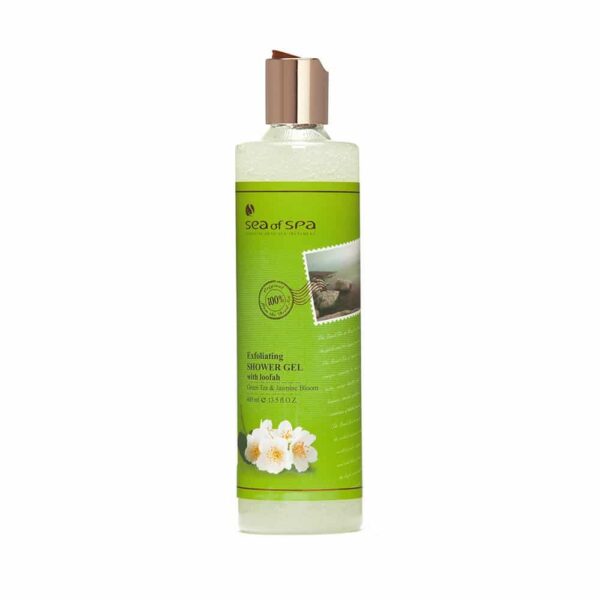
Sodium chloride on its own isn’t especially gentle on skin in concentrated form — it can feel sharp and drying when used in a scrub. Swap in a blend heavier on magnesium and calcium instead, and both the texture and the after-feel shift noticeably. That’s the real reason Dead Sea salt found a home in body care while sea salt stayed in the kitchen: the mineral ratio simply suits skin better than a salt built to season food. Products like the Sea of Spa Green Tea & Jasmine Blossom Washing Lotion – 400 ml lean on that same mineral base rather than plain sodium chloride, pairing it with loofah fibers for gentle daily exfoliation.
Worth being direct here: this is a cosmetic skincare category, not a medical one. A mineral-rich wash or soak can leave skin feeling softer and more comfortable — that’s it. It doesn’t treat, cure, or diagnose any skin condition, and nobody should read it that way.
Can You Cook With Dead Sea Salt?
No — and this trips up more people than you’d guess. Dead Sea salt is meant for external, cosmetic use, not for eating. Its unusually high magnesium content actually makes it taste bitter, nothing close to the clean salty flavor you want from a seasoning. It isn’t sold, labeled, or intended as food anywhere in Ashury’s range. If a recipe calls for sea salt, grab actual sea salt or table salt from the kitchen aisle, not a Dead Sea mineral blend off the bath shelf.
How to Choose the Right Product
Once you’ve settled on the skincare version rather than the cooking version, the next question is which format actually fits your routine:
- Want a classic soak? The BioSpa Crystal Bath Salt or the larger Bio Spa-Mineral Salt Crystals – 1000 gr both dissolve straight into warm bathwater, no extra steps needed.
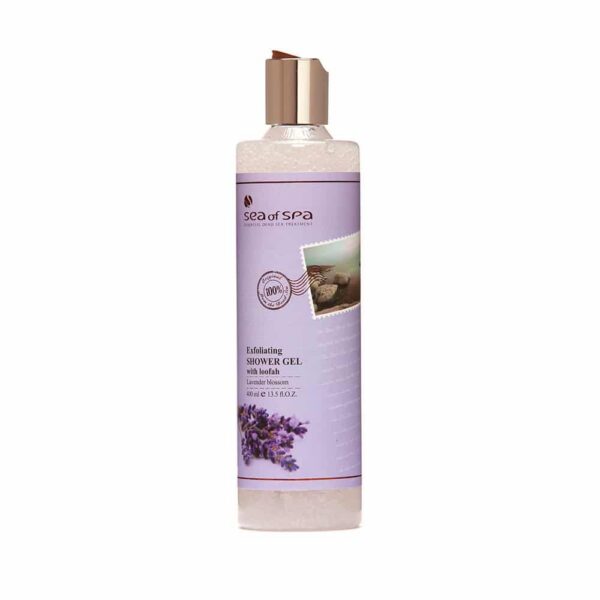
- Prefer a shower to a bath? A wash built on the same mineral base, like the Sea of Spa Lavender Blossom Bath Gel – 400 ml, gets you the minerals without a tub at all.
- Want to actually exfoliate rather than just soak? The Aromatic Peeling Oil with Dead Sea Salt combines salt crystals with pure oils for a scrub, not a dissolve-and-soak product.
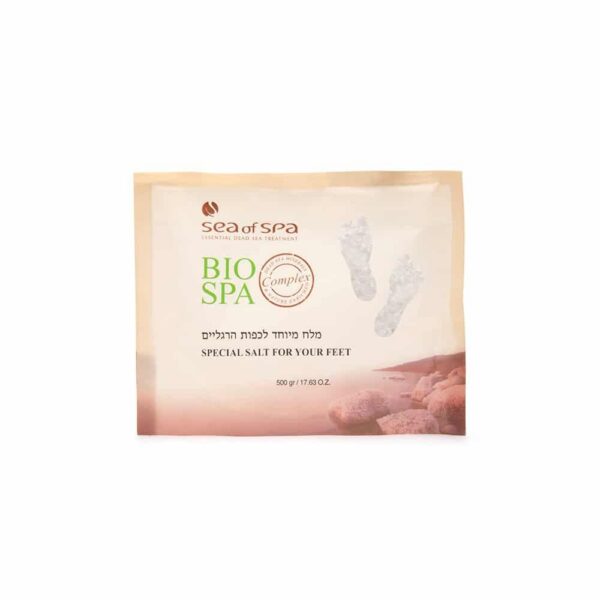
- Just tired feet? The BioSpa Special Foot Salt – 500 g targets that one area instead of a full-body soak.
How to Use It Once You’ve Picked
Whichever format you land on, the routine barely changes. Dissolve or apply in warm water, not scalding hot — heat alone can dry out skin before the minerals get a chance to do anything. Give it ten to twenty minutes for a soak, or however long a normal shower runs for a wash. Rinse afterward, every time. Then moisturize while skin is still a little damp, because mineral salt soaks and washes can leave skin feeling tight if you rinse off and just walk away.
A mistake worth avoiding
Don’t assume “sea salt” on a label means the same thing as “Dead Sea salt.” They’re genuinely different ingredients, with different mineral profiles and different jobs, and mixing them up in your head is a quick way to end up disappointed by a product that was never built to do what you wanted from it.
My Actual Recommendation
If your goal is skin and body care rather than cooking, skip generic sea salt products altogether and look for something that names Dead Sea salt specifically, the way every product mentioned above does. Start with the BioSpa Crystal Bath Salt for the simplest entry point, or the exfoliating oil if you’d rather scrub than soak. These are newer additions to the lineup without star ratings yet, so weigh them on formula and intended use rather than a review count. Either way, the mineral profile is the entire reason this category exists separately from your kitchen salt shaker.
Quick Answers
What makes Dead Sea salt different from regular sea salt?
Ordinary sea salt is mostly sodium chloride. Dead Sea salt runs unusually low in sodium and rich in magnesium, calcium, potassium and bromide — which is why it’s favored for skin and body care rather than cooking.
Can I cook with Dead Sea salt?
No. Dead Sea salt is for external, cosmetic use only. Its high magnesium content tastes bitter, and it isn’t sold as a food product.
Shop this guide
-
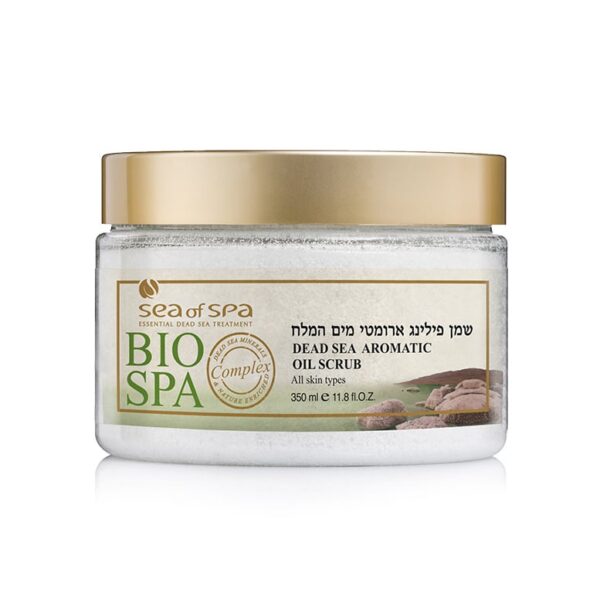 Bio Spa Aromatic Peeling Oil with Dead Sea Salt $10Select options This product has multiple variants. The options may be chosen on the product page
 -
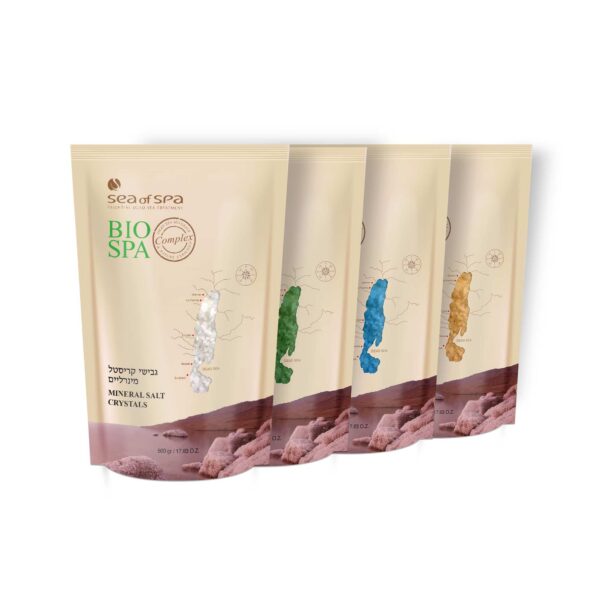 Bio Spa BioSpa Crystal Bath Salt $4Select options This product has multiple variants. The options may be chosen on the product page
 -
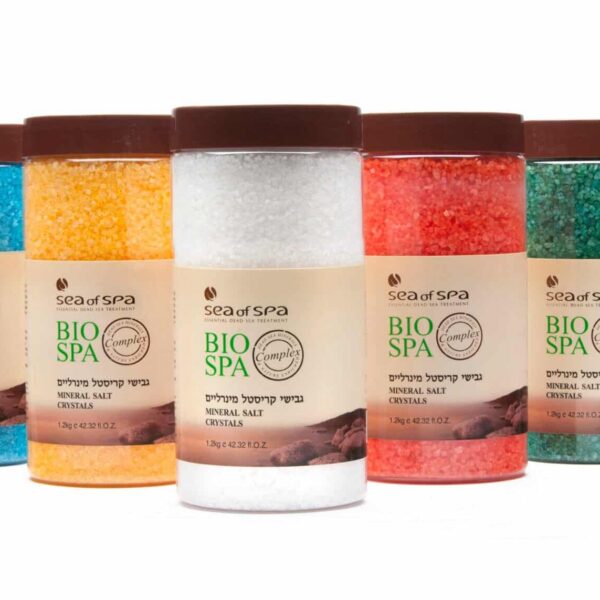 Bio Spa Bio Spa-Mineral Salt Crystals - 1000 gr $10Select options This product has multiple variants. The options may be chosen on the product page
 -
-
-
-
-
-


Frequently asked questions
What makes Dead Sea salt different from regular sea salt?
Ordinary sea salt is mostly sodium chloride. Dead Sea salt is unusually low in sodium and rich in magnesium, calcium, potassium and bromide, which is why it is favored for skin and body care.
Can I cook with Dead Sea salt?
No — Dead Sea salt is for external, cosmetic use, not eating. Its high magnesium content tastes bitter and it isn't a food product.